
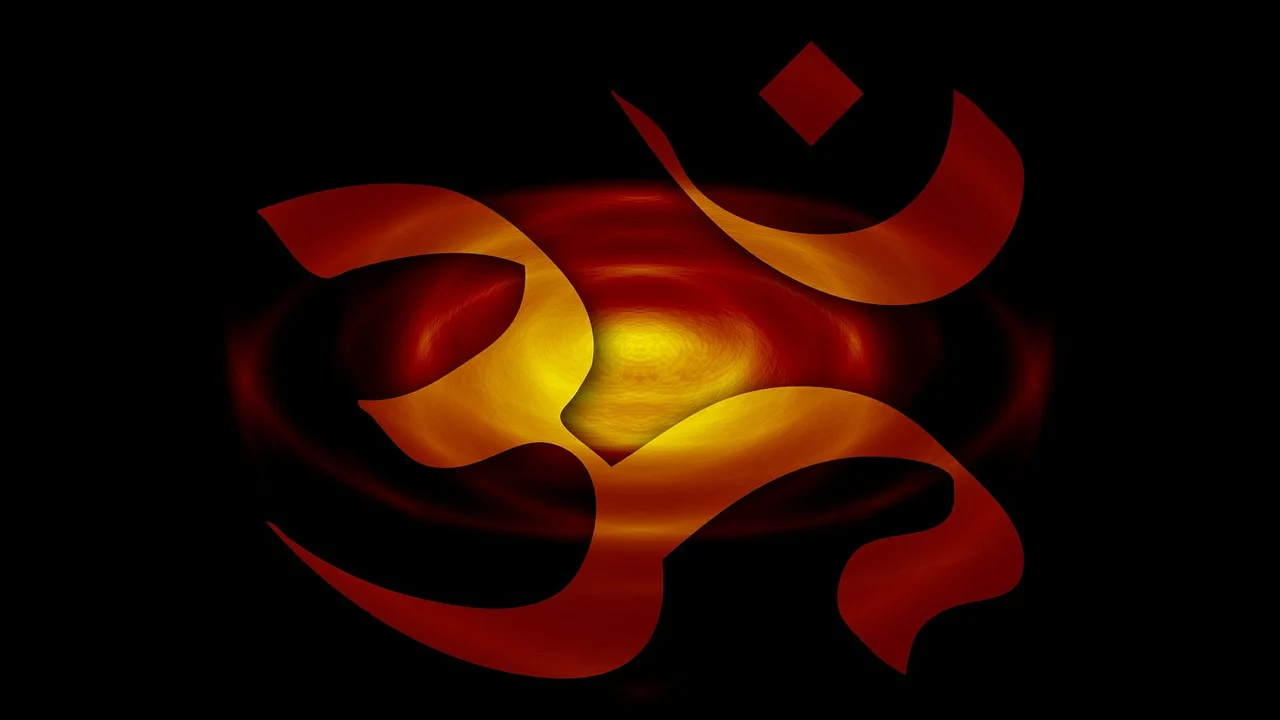

Chanting Om: The Science, Benefits, and Correct Technique
In the beginning was the Word, and the Word was with God, and the Word was God. This ancient wisdom from the Christian Bible echoes a truth found in nearly every spiritual tradition: the universe began with a sound. In the Vedic tradition of India, that primordial sound is “Om.” It is not just a word; it is the vibration of the universe, the seed from which all of creation sprang. Chanting Om is one of the simplest, yet most profound, spiritual practices one can undertake. It is a direct path to inner peace, a tool for healing, and a gateway to higher consciousness. But its power is not just mystical; it is also scientific. This guide will delve into the science of Om, explore the incredible chanting om benefits, and teach you the correct chanting technique to harness its full potential.
The Science of Om: More Than Just a Sound
While often seen as a purely religious symbol, Om is a sound with a verifiable impact on our physiology and neurology. Modern science is now beginning to validate what the ancient sages have known for millennia.
The Physics of Vibration: Everything in the universe is in a state of vibration. From the smallest atom to the largest galaxy, everything vibrates at a specific frequency. Om, when chanted correctly, produces a specific frequency that is said to be in harmony with the frequency of the universe. When we chant Om, we are literally tuning our individual energy system—our body, mind, and spirit—to the cosmic frequency. This creates a state of resonance, where we feel more connected, balanced, and whole.
The Neurological Impact: The act of chanting Om has a direct and measurable effect on the brain. The “A-U-M” sound spans the entire vocal range, from the throat to the lips. This vibration stimulates the vagus nerve, which runs from the brainstem down to the abdomen and is a key player in the parasympathetic nervous system (our “rest and digest” mode). Stimulating the vagus nerve helps to:
- Lower Heart Rate and Blood Pressure: It calms the cardiovascular system.
- Reduce Stress Hormones: It decreases the production of cortisol and adrenaline.
- Improve Digestion: It enhances the function of the digestive organs.
- Calm the Mind: It reduces brainwave activity, leading to a state of deep relaxation and meditative awareness.
Functional MRI studies have shown that chanting can decrease activity in the amygdala, the brain’s fear center, and increase activity in the prefrontal cortex, which is associated with focus, awareness, and emotional regulation. The science of Om reveals that it is a powerful, non-pharmacological tool for managing stress and anxiety.
The Profound Benefits of Chanting Om
The benefits of incorporating Om chanting into your daily life are holistic, touching every aspect of your being. The chanting om benefits are both immediate and cumulative.
1. Mental and Emotional Benefits
- Reduces Stress and Anxiety: This is one of the most well-known benefits. The rhythmic vibration and focus required for chanting act as a natural tranquilizer for the mind, calming the “monkey mind” and dissolving anxious thoughts.
- Improves Concentration and Focus: Chanting Om is a form of Dharana (concentration) in yoga. By focusing on the sound and the vibration, you train your mind to stay in the present moment. This enhanced focus carries over into all other areas of your life.
- Emotional Balance: The vibration of Om has a cleansing effect on the emotional body. It helps to release pent-up emotions like anger, grief, and fear, leading to a state of inner peace and emotional stability.
- Increases Positivity: The sound of Om is inherently positive and uplifting. Regular chanting can help to replace negative thought patterns with a more optimistic and peaceful outlook on life.
2. Physical Benefits
- Strengthens the Lungs and Voice: The deep, controlled breathing required for chanting strengthens the diaphragm and respiratory muscles. It also exercises the vocal cords, improving the quality of your voice.
- Improves Digestion: As mentioned, by stimulating the vagus nerve, Om chanting can improve the efficiency of the digestive system, helping to alleviate issues like indigestion and bloating.
- Detoxifies the Body: The increased oxygen intake and improved circulation during chanting help to flush out toxins from the body.
- Improves Sleep: A few minutes of Om chanting before bed can calm the nervous system and release the day’s tensions, leading to deeper, more restful sleep.
3. Spiritual Benefits
- Deepens Meditation: Chanting Om is an excellent way to begin a meditation session. It helps to quiet the mind and create a sacred space, allowing you to slip into a deeper state of meditation more easily.
- Connects You to Your Higher Self: Om is the sound of the Self, of pure consciousness. Chanting it helps you to connect with this innermost part of yourself, beyond the ego and the fluctuations of the mind.
- Creates a Sense of Unity: As the sound of the universe, chanting Om helps you to feel a sense of connection to all that is. It dissolves the illusion of separation and fosters a feeling of oneness with all of creation.
- Clears Energy Blocks: In yogic philosophy, we have energy channels (nadis) in our subtle body. The vibration of Om helps to clear any blockages in these channels, allowing the life force (prana) to flow freely.
The Correct Chanting Technique: A Step-by-Step Guide
To experience the full chanting om benefits, it is crucial to chant with the correct chanting technique. The power lies not just in the sound, but in the intention, posture, and awareness behind it.
Step 1: Find a Comfortable Posture (Asana) Sit in a comfortable cross-legged position on the floor, such as Sukhasana (Easy Pose) or Padmasana (Lotus Pose). If sitting on the floor is uncomfortable, you can sit on a straight-backed chair. The most important thing is to keep your spine erect, your shoulders relaxed, and your head straight. This allows the energy to flow freely up your spine.
Step 2: Center Yourself and Set an Intention Close your eyes. Take a few deep, conscious breaths. Let go of the outside world and bring your awareness to your inner self. Set a simple intention for your practice. It could be for peace, for healing, or simply to connect with the divine vibration.
Step 3: Understand the Three Parts of Om The sound of Om is composed of three distinct sounds, followed by a silence:
- A (pronounced “ah” as in “father”): This sound originates in the base of the throat, at the back of the mouth. It resonates in the lower abdomen and chest. It represents creation, the beginning, and the waking state of consciousness (Jagrat).
- U (pronounced “ooh” as in “moon”): This sound rolls forward from the “A” sound, resonating in the middle of the mouth and the chest. It represents preservation, the middle, and the dreaming state of consciousness (Swapna).
- M (pronounced “mm” as in “sum”): This sound is created by closing the lips. It resonates at the front of the mouth and vibrates through the entire skull. It represents dissolution, the end, and the deep, dreamless state of consciousness (Sushupti).
- The Silence (Anusvara): After the “M” sound fades, there is a moment of profound silence. This silence is the most important part. It represents the fourth state, Turiya, the state of pure, transcendental consciousness.
Step 4: The Chanting Process
- Take a deep inhalation through your nose.
- As you exhale, open your mouth and chant the “A” sound, feeling the vibration in your belly and chest.
- As the “A” sound begins to fade, slowly close your mouth to form the “U” sound, feeling the vibration rise into your chest and throat.
- Finally, close your lips to produce the long, humming “M” sound, feeling the vibration fill your entire head.
- When the “M” sound naturally fades away, sit in the ensuing silence for a few moments. Feel the vibration reverberating throughout your body.
- Repeat this process 3, 7, or 11 times.
Step 5: Feel the Vibration The key is not just to make the sound, but to feel it. Be a witness to the vibration. Feel it in your belly, your chest, your throat, and your head. This mindful awareness is what transforms a simple sound into a profound meditative experience.
Conclusion: The Sound of the Universe Within You
Chanting Om is a gift from the ancient sages, a simple yet powerful tool for navigating the complexities of modern life. It is a bridge between the material and the spiritual, the scientific and the mystical. The science of Om validates its ability to calm our nervous system, while the spiritual tradition points to its power to connect us with the very essence of who we are. By understanding its benefits and practicing the correct chanting technique, you can unlock a wellspring of peace, clarity, and joy within you. You don’t need to be a great singer or a spiritual guru. All you need is a willingness to try, a few moments of your day, and an open heart. Chant Om, and feel the universe resonate within you.
5. FAQs Section
1. How many times should I chant Om for it to be effective? There is no strict rule. Even chanting Om 3 times with full awareness can be powerful. However, for a more meditative practice, chanting it 11, 21, or 108 times is traditional. Consistency is more important than quantity. A few minutes of daily practice is better than one long session a week.
2. Can I chant Om silently in my mind? Yes, absolutely. While chanting aloud has the added benefit of physical vibration, silent chanting (japa) is also extremely powerful. It can be done anywhere, at any time, and is an excellent way to center yourself in a stressful situation.
3. Is Om a religious sound? Can people of any faith chant it? While Om has its roots in Hinduism, it is considered a universal, non-denominational sound. It is the primordial vibration, not a religious dogma. People of all faiths and backgrounds can chant Om to experience its calming and centering benefits.
4. What is the best time to chant Om? The best times to chant are during the Brahma Muhurta (early morning, approx. 4-5 AM) and during the Sandhya (twilight hours, sunrise and sunset). These times are considered highly Sattvic (pure) and conducive to spiritual practice. However, you can chant Om anytime you feel stressed, anxious, or simply need a moment of peace.
5. I feel self-conscious chanting out loud. What should I do? That’s a very common feeling! Start by chanting in a private space where you won’t be disturbed. You can also begin by chanting very softly, almost whispering, and gradually increase the volume as you become more comfortable. Remember, the most important part is the internal feeling and awareness, not the volume of your voice.