
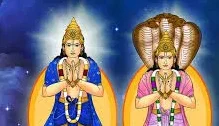

Introduction: The Shadow Dancers of Destiny
In Vedic Astrology (Jyotish), the planetary system includes the seven visible planets (Sun, Moon, Mars, Mercury, Jupiter, Venus, and Saturn) and two crucial, invisible points known as the Lunar Nodes: Rahu (the North Node) and Ketu (the South Node). These are not physical bodies; they are mathematical intersections where the Moon’s orbital path crosses the Sun’s apparent path (the ecliptic). Yet, their influence is considered the most potent force in defining a soul’s present-life karma and ultimate destiny.
Rahu and Ketu are known as Chhaya Grahas (Shadow Planets) because they are responsible for eclipses—cosmic events where the light of the Sun or Moon is temporarily blocked. Symbolically, they represent the karmic shadows we carry: the insatiable desires we must fulfill (Rahu) and the spiritual wisdom we have already mastered and must leave behind (Ketu). They are the serpent heads and tails that form the Karmic Axis of every birth chart, always sitting exactly 180 degrees apart.
This comprehensive, EEAT-compliant guide provides an expert breakdown of the profound astrological significance of Rahu and Ketu. We will explore their distinct natures, how their placement in your chart defines your life’s mandate, and how to harness their powerful, transformative energy for spiritual growth and success.
Part 1: Rahu (The North Node) – The Head of the Dragon
Rahu is the Dragon’s Head. Its nature is akin to that of Saturn, but with an insatiable, obsessive, and unconventional energy. Rahu represents everything the soul craves and strives for in this lifetime—the area of life where desire is limitless and often illogical.
Rahu’s Nature and Significance
- Material Obsession and Desire: Rahu governs the future, foreign things, rapid fame, technology, and materialism. It gives an intense hunger for the things it touches, which, if not controlled, can lead to delusion and dissatisfaction.
- Unconventional and Foreign: Rahu brings in the element of the unconventional, the foreign, and the taboo. It often pushes the native toward careers or experiences outside their cultural or family background (e.g., technology, aviation, foreign lands).
- Illusion and Maya: Rahu is the master of illusion (Maya). It can create a bubble of false ambition, rapid success followed by sudden downfall, or relationships based on deceit. Its lessons are learned through disillusionment.
- Karmic Mandate: The house and sign where Rahu is placed show what the soul needs to learn and acquire in this life. It represents the direction of growth—the unfulfilled ambition from past lives that requires completion now.
Key Traits of a Strong Rahu Influence
- Rapid Ascent: The ability to achieve quick, sometimes unexpected, fame or wealth.
- Innovation: A knack for technology, out-of-the-box thinking, and challenging the status quo.
- Restlessness: A persistent feeling of anxiety, always seeking the “next big thing” and never being truly satisfied.
Part 2: Ketu (The South Node) – The Tail of the Dragon
Ketu is the Dragon’s Tail. Its nature is akin to that of Mars, but with a highly spiritual, detached, and often painful energy. Ketu represents everything the soul has mastered and is now ready to release in this lifetime—the area of life where satisfaction is impossible and detachment is the only reward.
Ketu’s Nature and Significance
- Spiritual Detachment: Ketu governs liberation (Moksha), detachment, intuition, isolation, and hidden matters. The things Ketu touches, the native feels detached from, often experiencing a lack of interest or satisfaction, even when they succeed.
- Past Life Mastery: The house and sign where Ketu is placed show the area of life where the soul has already completed its curriculum. Talent in this area is innate, but using it for material gain feels draining or pointless.
- Intuition and Insight: Ketu provides deep, penetrating insight, strong intuition, and a profound connection to the metaphysical world. It is the planet of research, investigation, and hidden spiritual knowledge.
- Karmic Mandate: Ketu represents the karmic baggage we bring in. Its lesson is to use the mastery attained in that area to serve others or gain spiritual wisdom, not for personal ego or material attachment.
Key Traits of a Strong Ketu Influence
- Innate Talent: Natural, effortless skill in the area of life it rules, often without formal training.
- Isolation: A tendency toward seclusion, introversion, or feeling alone, even in a crowd.
- Spiritual Quest: A natural pull toward mysticism, healing, occult sciences, and the ultimate quest for liberation.
Part 3: The Rahu-Ketu Axis – The Karmic Seesaw
The true astrological significance of Rahu and Ketu lies in their relationship as an axis. They create a cosmic seesaw that dictates the focus of your current incarnation:
- Rahu House: Your forward direction; the lesson to be learned through desire and action.
- Ketu House: Your past life; the foundation of innate talent that must be released.
The axis compels you to move from the comfort zone of Ketu toward the challenge zone of Rahu. If you resist Rahu’s mandate (your forward growth), Ketu (the past) will often cause pain or detachment in the area it rules, forcing you to look forward.
The 12 Karmic Axes and Their Mandate
| Axis (Rahu/Ketu Houses) | Rahu’s Drive (Future) | Ketu’s Detachment (Past Mastery) | Life Mandate |
| 1st / 7th | Self-Identity, Personal Power | Marriage, Partnerships | Leave dependence on others; build self-identity and personal initiative. |
| 2nd / 8th | Accumulated Wealth, Speech | Joint Assets, Sudden Change, Occult | Focus on self-made wealth and truthful speech; detach from crisis and hidden money. |
| 3rd / 9th | Courage, Communication, Siblings | Fortune, Mentor, Dharma | Use communication and effort for personal growth; question and evolve beyond old beliefs. |
| 4th / 10th | Home, Mother, Inner Peace | Career, Public Status, Authority | Focus on domestic, emotional roots; let go of rigid professional status and ego. |
| 5th / 11th | Creativity, Children, Romance | Gains, Friends, Networks | Master creativity and self-expression; detach from large social networks and groups. |
| 6th / 12th | Health, Service, Daily Routine | Expenditure, Spirituality, Isolation | Master service and routine; release spiritual escapism and hidden enemies. |
Part 4: Rahu and Ketu in Major Planetary Periods (Dashas)
The most intense periods of the Nodes’ influence occur during their Dasha (major planetary period), which lasts for 18 years for Rahu and 7 years for Ketu.
- Rahu Dasha (18 Years): This period is marked by high ambition, rapid change, and unconventional opportunities. It can bring immense material success but often comes with high risk, anxiety, and a moral compromise. The native feels compelled to fulfill the house and sign where Rahu sits.
- Ketu Dasha (7 Years): This period is often marked by sudden detachment, spiritual awakening, isolation, and loss. Material pursuits lose their charm, and the native is pushed toward meditation, research, or service. The key lesson is to find peace through letting go.
Part 5: Managing the Shadow – Remedial Measures
The shadow planets are not “bad”; they are just extremely demanding. Their energy cannot be ignored, only channeled correctly.
1. The Core Mantra for Rahu and Ketu
Both Rahu and Ketu are controlled by Lord Shiva, as they are parts of the same serpent energy.
- Remedy: Daily chanting of “Om Namah Shivaya” 108 times pacifies their volatile energy, turning illusion (Rahu) into wisdom (Ketu).
2. Appeasing Rahu (The Obsession)
Since Rahu rules technology and illusion, its energy must be grounded and directed ethically.
- Action: Practice discipline (a Saturnian quality). Avoid excessive use of gadgets and social media, as Rahu magnifies their addictive qualities.
- Donation: Donate dark blue/black cloth, black sesame seeds (kale til), or mustard oil on Saturdays to the needy.
3. Appeasing Ketu (The Detachment)
Since Ketu rules detachment, its energy must be utilized for service.
- Action: Channel Ketu’s energy into research, meditation, or spiritual healing. Volunteer work where you receive no recognition is ideal (matching Ketu’s desire for anonymity).
- Donation: Donate multi-colored cloth, cereals, or a brown blanket on Tuesdays.
4. The Power of Worshiping Ganesha and Durga
- Lord Ganesha (remover of obstacles) is the presiding deity of Ketu. Worshipping Ganesha clears the fog and gives intuitive insight.
- Goddess Durga is the presiding deity of Rahu. Worshipping the fierce form of the divine feminine helps overcome the illusions and enemies created by Rahu.
Conclusion: The Nodes as Guides to Liberation
The astrological significance of Rahu and Ketu goes far beyond surface-level prediction; they are the most direct indicators of your current karmic journey toward liberation (Moksha). Rahu pulls you into the material world of desire to fulfill your past-life deficits, while Ketu provides the innate wisdom and eventual detachment required to exit the cycle.
By understanding the house axis they form, you know exactly what your soul’s current lesson is. Instead of fearing these shadow planets, embrace them as your most honest spiritual guides. When you consciously work to fulfill Rahu’s forward-looking agenda with ethical effort and simultaneously use Ketu’s mastery for selfless service, you turn the serpent’s constriction into a cosmic ladder, climbing toward higher consciousness and ultimate destiny.
FAQs Section
- Is Rahu Dasha always a period of financial loss?
No. Rahu Dasha (18 years) is often a period of significant, rapid material gain, especially in unconventional areas like technology or foreign trade. However, it is also a period of illusion and high anxiety. The financial gains often come at a heavy cost to personal peace, ethics, or health.
- Why are Rahu and Ketu always 180 degrees apart in the birth chart?
Rahu and Ketu are always 180 degrees apart because they are the two points where the Moon’s path intersects the Sun’s path (the ecliptic). They are diametrically opposite poles of a single, continuous orbital line, symbolizing the opposing but connected forces of past (Ketu) and future (Rahu) karma.
- What happens if Rahu and Ketu are strong in the birth chart?
A strong Rahu makes the person highly ambitious, successful in unconventional fields (technology, research), and famous. A strong Ketu makes the person deeply intuitive, highly spiritual, successful in secretive work (like research or healing), and detached from material outcomes.
- How does the Lunar Eclipse relate to Rahu and Ketu?
Lunar and Solar Eclipses occur precisely when the Sun, Earth, and Moon align along the Rahu-Ketu axis. During a Lunar Eclipse, the Earth casts its shadow on the Moon, and the energy of Rahu (the node associated with the eclipse) is amplified, often causing emotional turmoil and a sense of unease.
- What is the biggest mistake people make in dealing with their Rahu placement?
The biggest mistake is ignoring the Rahu house and retreating into the comfort zone of the Ketu house. Rahu represents the soul’s current mandate for growth. Avoiding it leads to chronic dissatisfaction in the Ketu house, as the soul is being blocked from its forward evolution.